A robotics startup doesn't need the largest lab or the biggest software budget to pressure a large technology company. It needs a narrow task, working hardware, and a customer willing to pay for the result.
Quick read
- Startups can focus on one robot task instead of a broad product range.
- Hardware tests expose problems that software demos can hide.
- Buyers should ask for proof from a real site, not only a video.
A smaller target makes the work clearer
Large technology companies can work across chips, cloud software, consumer devices, and artificial intelligence. That reach brings money and staff, but it can also spread attention across too many products.
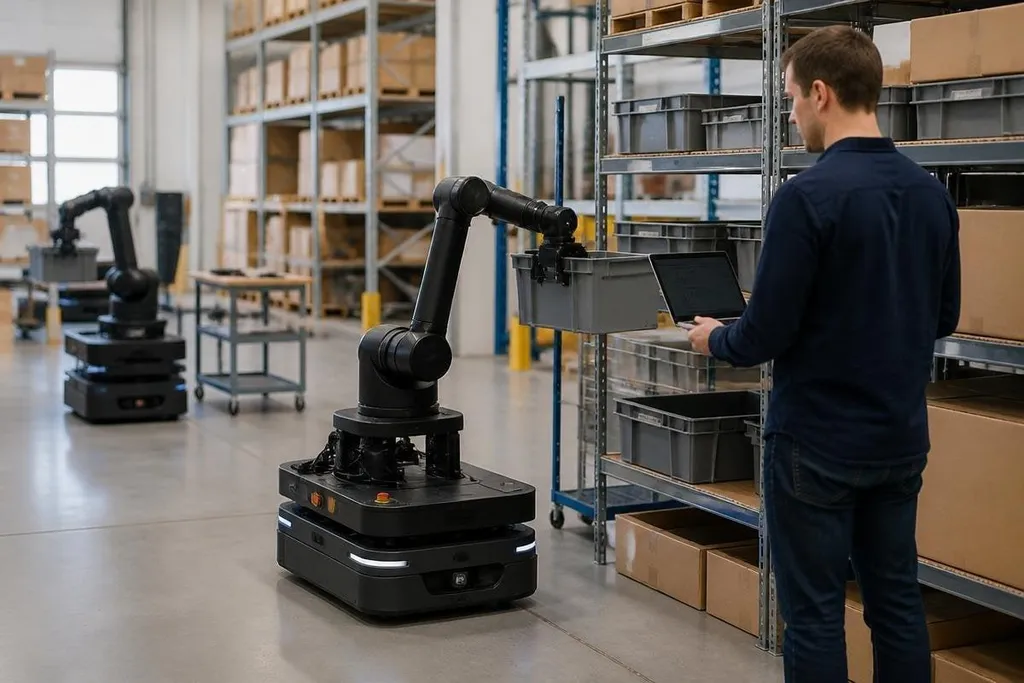
A startup can choose one job inside that wider field. It might build a mobile robot for warehouse transport, a vision system for sorting, or a robotic arm for machine tending. The narrow target gives its engineers a clear test: does the system finish the job safely and at a cost the customer accepts?
That focus changes the sales process too. A startup can speak with the people who run a site every day, then adjust the robot around the task they actually need done. A large company may have more tools, but a buyer still pays for a machine that works beside a conveyor or reaches the correct shelf.
Hardware creates a different contest
Software can reach many customers through an update. A robot needs motors, sensors, batteries, safety controls, service parts, and a way to work around people. Each part adds a failure point.
That makes the test site more useful than a polished product video. A camera may read a label under bright light and fail when dust covers the lens. A mobile base may map a clean floor and stop when a pallet blocks its route. A gripper may lift one package and slip on another with a different surface.
These problems give startups a path into markets that large software companies may approach from the wrong direction. The startup that fixes a small physical task can build a relationship before a broader platform is ready to sell there.
The trade is plain. A focused robot may solve one job well, but it may have little use outside that setting. Its maker also needs spare parts, field service, safety checks, and training. Those costs arrive before the company has many customers to spread them across.
Customers decide which claims survive
A startup claim needs a named site and date when it says its robot works outside a lab. Robot24 can put those details beside the company’s demo, so you can see whether the machine reached a customer or stayed in testing. That distinction leads to the proof below.
The useful proof sits close to the work. Look for a named customer, the site where the robot runs, the task it performs, and the result the customer measured. A statement that a robot “works in warehouses” says little without the job, operating conditions, and length of the trial.
The same test applies to big tech. A large name may reduce doubts about funding or support, but it doesn't prove that a robot can handle a specific task. A startup may have the better machine for one use, while the larger company may offer stronger software tools or service coverage.
I’d judge the smaller company by the gap between its demo and its daily work. A robot that runs one repeatable task for months has more value than a wide product plan with no site evidence.
What can slow a startup down
The hardest problems often appear after a customer signs. A robot must keep working when lighting changes, objects move, staff take over a task, or a network connection drops.
Safety adds another test. The system needs clear stop controls, known operating limits, and a safe response when a sensor fails. A buyer also needs to know who fixes the robot when a motor, battery, camera, or gripper stops working.
Cash can limit the work before the design is ready. Building a small run of robots costs more than making software copies, and a delayed shipment can affect both the startup and its customer. A company with a narrow product may also struggle if its first market slows.
A buyer’s checklist
Use these questions before treating a startup as a serious supplier:
- Name the task: What exact job does the robot perform, and what stays manual?
- Check the site: Can the company identify a live customer location and trial period?
- Ask for failure data: What objects, surfaces, lighting, or floor conditions cause errors?
- Price the full system: Include installation, software, training, service, batteries, and spare parts.
- Plan the handoff: Who responds when the robot stops, and how fast can parts arrive?
- Set a trial result: Agree on the output, safety limits, and reporting method before purchase.
The startups that pressure big tech will be the ones that turn a narrow robot task into repeatable site work. The open question is how many can keep that performance once the customer asks for more tasks, more sites, and support after the demo is gone.